 ProductAd
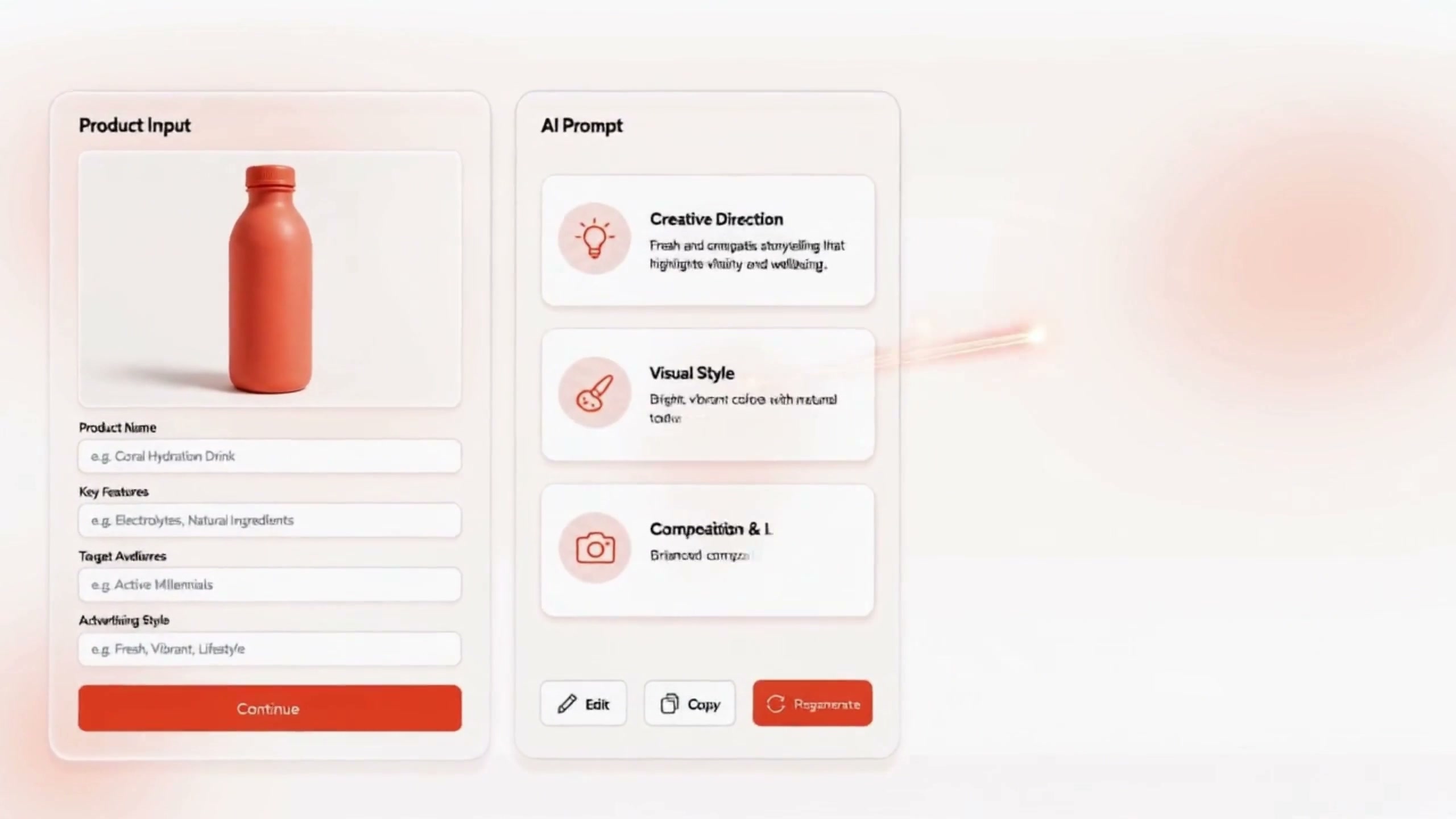
Creative testing often dey turn simple routine: publish unrelated adverts, wait for platform to spend, call di lowest-cost result winner, and request more adverts wey look alike. Dis fit bring gain sometimes, but e rarely build lasting understanding of why customers dey respond.
Better system dey separate strategy from execution. E dey define wetin change, wetin remain stable, which result go count as evidence, and wetin di team go do after seeing di result. Dis framework cover still-image adverts, short videos, creator-led content, product demonstrations, and mixed campaign batches wey dem create through AI product-advert generator or traditional production team.
1. Use three-layer model: concept, execution, iteration
Concept na di advert argument. E dey connect audience situation to product benefit and reason to believe. “Small blender for commuters wey want fresh breakfast for work” na concept. “Fast cuts with bold yellow captions” no be concept; na execution choice.
Execution na how di concept appear. E include format, visual style, presenter, opening shot, pacing, script, caption treatment, duration, music, layout, and call-to-action wording. Different executions fit express di same concept. Dis difference matter because weak execution no necessarily disprove di concept, and strong visual execution fit temporarily hide weak message.
Iteration na di next change wey you make after evidence. E fit strengthen di hook, add clearer proof, narrow di audience, clarify di offer, shorten di setup, or adapt winning concept to another format. Record di reason for di brief. “Make ten more” na production request, no be iteration strategy.
If you fit describe difference between two adverts only with visual adjectives—cleaner, bolder, faster, more premium—you probably dey test executions. If di reason why customer suppose buy change, you dey test concepts.
2. Start each test with question wey go guide decision
Useful test dey start with question wey di business fit act on. Which customer problem dey earn attention from more suitable people? Demonstration dey build more trust than lifestyle images? Bundle dey persuade pass percentage discount? Convenience benefit dey perform pass technical feature? Di question dey determine di variables, assets, and metrics wey you need.
Prioritise questions by possible impact and uncertainty. Small caption-colour change fit dey easy to test, but e unlikely to rescue concept wey dey talk to wrong audience. Early for product or campaign, test big strategic differences: audience, problem, result wey dem want, mechanism, proof, and offer. Once direction show evidence, test finer execution choices.
Write di hypothesis in way wey evidence fit disprove: “For first-time visitors, showing cleanup demonstration for di opening five seconds go improve qualified landing-page visits because easy cleanup na di most common concern before purchase.” Dis sentence identify audience, change, expected effect, and reason. E also tell di production team which footage matter.
3. Make table of variations without confusion
Variation matrix na table wey list variables wey you fit test. Common rows na audience, problem, benefit, proof, offer, hook, visual format, presenter, duration, and call to action. Di matrix no mean say make you generate every possible combination. E dey make choices clear and prevent duplication wey no intentional.
For example, one product fit support three concepts: save time, reduce mess, and make am easier to carry. Each concept fit get three hooks: problem first, result first, and demonstration first. Dat na nine meaningful combinations before you change visual style, caption design, or duration. Choose small set wey answer di current question instead of expanding di matrix into dozens of assets wey no relate well.
Audience, problem, result wey dem want, benefit, how product dey work, proof, objection, and offer.
How di hook dey worded, di first frame, format, presenter, pace, setting, visual style, caption system, length, and CTA.
Platform, placement, optimisation goal, audience targeting, spend, schedule, landing page, and attribution window.
Change one major variable at a time when learning na di priority. Real campaigns no be laboratories, so perfect isolation rarely possible. Still, no change audience promise, product offer, visual format, video length, and landing page all at once. If result change, you no go know wetin to repeat.
4. Set creative batch around one level of learning
Batch suppose big enough to represent real alternatives and small enough to interpret. For new product, concept batch fit get three very different customer arguments inside shared still-image or video structure. For concept wey don prove itself, execution batch fit get three opening hooks and two proof sequences while audience and offer remain stable.
Still-image and video assets fit work together. Use workflow for image advert to test short message-and-visual combinations, then develop concepts wey get promise into fuller demonstrations or creator-style videos. Or use video to find customer language and objections, then turn di clearest frames and claims into still-image variations. Di formats suppose share learning, no be to work like separate content factories.
Set production limits wey protect quality. Define approved product facts, source media, brand rules, compulsory offer wording, restricted claims, safe zones, output ratios, and file specifications. ProductAd fit reuse saved product record across image and video projects to reduce differences between variations, but every output still need checking for correct facts and brand details.
5. Name every asset so di hypothesis no go lost
Creative learning dey disappear when files get names like “new advert”, “final final”, or random export number. Set naming pattern wey capture important variables. Useful structure na product / concept / hook / format / duration or ratio / version. Keep values short and consistent.
For example: “portable-blender / commuter-time / result-first / ugc-video / 20s / v1.” Di name dey tell strategist wetin di advert suppose test without opening di file. Campaign and platform names fit use di same identifier so performance exports fit connect back to di source brief.
Keep simple creative record with asset URL, hypothesis, product, audience, concept, execution notes, launch date, campaign, spend, key results, interpretation, and next action. Spreadsheet don reach for small scale. As volume increase, creative project history and asset library dey reduce time wey you spend finding old variations and recreating lost work.
6. Control enough of di launch to make comparison useful
Creative no dey perform alone. Audience targeting, placement, optimisation event, budget, bidding, seasonality, stock, landing page, and offer fit change di result. Document dis conditions and keep dem reasonably consistent across adverts wey you want compare.
No declare winners too early. Delivery systems fit concentrate spend unevenly, and small samples dey make costs unstable. Decide beforehand how much evidence you need based on campaign economics. Product wey get plenty low-cost conversions fit reach decision quicker than product wey get long buying cycle and few purchases per week.
Still check message continuity. Advert wey promise particular bundle, audience use case, or product result suppose lead to page wey confirm di same proposition. Poor continuity fit make relevant advert look weak because di landing experience no finish di argument. Check di creative and destination as one path.
7. Read metrics according to di stage wey dem describe
No single metric be “di creative metric.” Opening retention, thumb-stop rate, view duration, click-through rate, landing-page engagement, add-to-cart rate, conversion rate, acquisition cost, and contribution margin dey describe different stages. Use dem to diagnose, no be to rank adverts by whichever number look best.
Attention and understanding
Early video retention and first-frame response fit show whether di hook dey catch attention. But attention without product understanding fit generate traffic wey no good. Check comments, watch di advert without sound, and compare di opening with di final claim. Surprising hook wey attract wrong viewer no always mean progress.
Interest and intention
Click-through and landing-page behaviour dey help judge message relevance. High click rate with weak page engagement fit mean curiosity without fit, landing page wey no clear, misleading promise, or wrong audience. Lower click rate fit still get commercial value if e filter suitable visitors.
Commercial result
Conversion, acquisition cost, average order value, repeat purchase, refund rate, and margin dey determine business value. Interpret dem with enough volume and proper time window. Creative wey attract buyers wey only want discount fit look efficient for first purchase but weaken profit later.
Ask where di process break: di advert no catch attention, no explain di product, no bring clicks from suitable people, or no convert di traffic wey e bring? Di next creative action depend on where di break happen.
8. Decide wetin to create next from clear diagnosis
After di test, classify each result. Winning concept deserve deeper execution and controlled expansion. Result wey get promise but no clear need cleaner retest. Weak hook for credible concept need new opening, no be entirely new argument. Strong attention result with poor conversion need review of claim accuracy, proof, audience fit, offer, and landing-page continuity.
No clone only di outside look of winning advert without keeping di strategic reason wey make am work. If demonstration drive performance, switching to lifestyle footage while keeping di same colours and captions fit remove di important part. If na offer drive performance, copying di visual without di offer no be real iteration.
Expand winners carefully. Test di same concept with new format, audience segment, proof point, creator, or platform placement. Keep control version when e possible. Continue to record why each new asset dey. guide for product video advert dey provide detailed process to turn chosen concept into hooks, scenes, voiceover, captions, and production inputs.
9. Build creative operating system, no be content queue
Mature testing process get rhythm wey dey repeat: collect customer evidence, prioritise questions, write concepts, produce controlled batches, launch with conditions wey dem record, diagnose results, and put di learning into di next brief. Dis loop matter pass any single template or tool.
Create shared definitions for concept, hook, proof, offer, execution, and iteration. Hold short reviews where di team discuss hypothesis and evidence, no be personal taste. Archive source briefs together with outputs. Revisit old winners to identify customer language wey still dey useful, and check failed ideas for tests wey no give clear conclusion rather than tests wey truly disprove dem.
AI fit make production faster, especially when you dey create different image directions or prepare video scenes. Speed dey increase need for discipline because e dey easy to generate more variations than di team fit label, check, launch, or learn from. Use product-advert workspace wey well arranged to keep products, media, templates, and generated projects connected, then keep di strategic context inside your test record.
Di goal no be endless creative. Na reliable system wey turn customer evidence into advert decisions, decisions into controlled outputs, and performance into di next useful question.
Build di next test from one product source
Use ProductAd to arrange product information, generate image and video variations, work from creative references, and keep project outputs available for di next improvement.
Start to create with ProductAd