 ProductAd
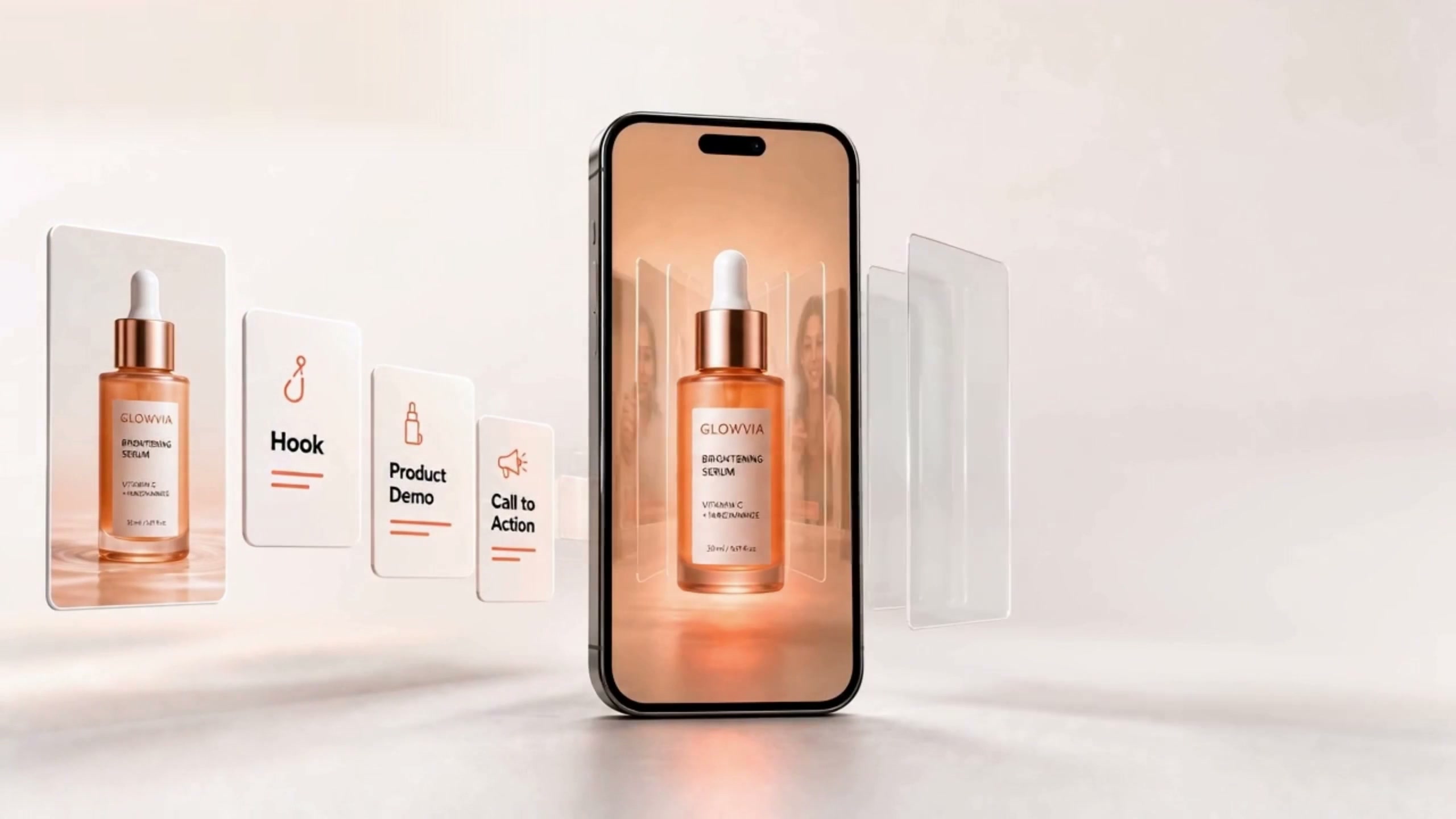
Di quickest way to waste product-video budget na to start with “make dis look exciting.” Dat request dey describe mood, no be marketing decision. Useful advert brief dey explain who suppose care, wetin dem suppose understand, why dem suppose believe am, and wetin dem suppose do next.
Dis guide dey give you process wey you fit repeat to develop dat brief. E dey work whether editor arrange di final video, creator record am, or dem generate am with AI video-advert workflow, or dem build am with mixture of product footage and generated scenes. Di tools fit change, but di strategic inputs dey remain very stable.
1. Build source brief before you choose format
Start with true product facts. Gather product name, category, price or offer, audience, main benefit, supporting benefits, mechanism, proof, objections, usage context, and available media. If di information scatter across product page, shared drive, campaign document, and chat thread, gather am together before production. Structured source dey reduce claims wey contradict one another and stop every new creative from starting from zero.
Product page often na useful beginning, but e no automatically be advert brief. Product pages na for visitors wey don arrive. Adverts must create enough relevance and curiosity to earn di visit. Use workflow from product URL to advert to collect details wey you fit use again, then add information wey di page fit no get: di audience situation, strongest objection, campaign objective, and why dis message matter now.
Wetin di product be, wetin e dey do, how to use am, and wetin person fit demonstrate honestly.
Di situation, frustration, desire, or job wey make di product relevant to dis viewer.
Di price, offer, bundle, deadline, availability, and landing page wey di advert must support.
Features, demonstrations, materials, customer language, measured results, or other things wey support di promise.
2. Define one advert idea for one sentence
Advert idea na di argument wey join di audience problem to di product. Write am as one sentence: “For people wey dey face X, dis product dey help dem achieve Y because of Z.” Dis sentence no be final copy. Na wetin go guide your decisions. Every scene suppose show di problem, demonstrate di benefit, support why person fit believe am, or move di viewer to act.
For example, portable-blender advert fit focus on convenience for commuters, control for buyers wey focus on nutrition, easy cleanup for busy parents, or portability for travellers. Na different concepts be those even if dem use di same product shots. If you try communicate all four for fifteen seconds, e usually go become list, no be persuasive story.
Choose di concept with campaign evidence when e possible. Search queries, product reviews, support questions, sales calls, and old advert comments dey reveal di language wey people use. When evidence no plenty, create two or three concept hypotheses and test dem as separate adverts. No blend dem into one compromise.
3. Write opening hook wey centre on relevance
Di opening seconds must answer question wey person no talk: “Why I go continue to watch?” New visual fit earn quick look, but na relevance dey earn attention. Good hooks dey make di intended viewer quickly recognise problem, result wey dem want, surprising mechanism, or useful demonstration.
Common hook structures include direct statement of problem, product use wey person no expect, before-and-after contrast, result wey show before explanation, question wey name di audience situation, or short claim wey proof follow immediately. Di link between di first frame and di rest of di advert matter pass di structure.
Mute di first three seconds and show person wey no know di brief. Dem fit tell di product category and di main reason to continue? Then listen without looking. Di spoken line dey add meaning, or e just dey describe wetin eye already dey see?
No start with logo animation unless na brand recognition itself be di reason to watch. Avoid vague talk like “Dis one change everything” unless di next part show di change clearly. No copy popular hook without checking whether e naturally lead to your product proof. Di hook na promise about di next few seconds; di video must fulfil am.
4. Design scene sequence as chain of decisions
Once di hook clear, outline di advert in beats instead of writing paragraph. Each beat suppose get one job. Simple fifteen-to-thirty-second sequence fit get hook, problem context, product introduction, demonstration, proof, offer, and call to action. Shorter adverts fit combine jobs for one scene; longer adverts fit spend more time on objections or comparison.
Write three columns for every beat: wetin viewer dey see, wetin viewer dey hear, and wetin viewer suppose understand. Dis dey catch common failure: fine footage without information, or heavy narration with visuals wey no support am. E also dey help editor or generator choose di right source media.
Show product action, no be only product presence
Product wey sit on surface dey show how e look. When dem open, apply, assemble, wear, pour, compare, or use product, e fit explain value. Anytime e possible, show how di benefit dey work. If di benefit na speed, show di short process. If na portability, show how di product enter bag and how person use am outside home. If na texture, show am for size and angle wey go make di texture visible.
Plan for di vertical frame
People often dey watch short adverts on narrow screens. Keep product, face, demonstration, and important text inside safe areas. Leave space for platform interface elements. Use close framing when viewer need notice small action. If you start from horizontal source media, decide whether you fit crop di important subject without losing meaning before you commit to di format.
5. Write script for watching with sound and without sound
Spoken copy suppose sound natural when person read am aloud. Use short sentences, concrete nouns, and verbs wey match action wey eye fit see. Remove introductions wey delay di idea. If creator or presenter appear, give dem di intention of di line together with di words; delivery dey better when di speaker understand wetin di scene must achieve.
Captions suppose keep di meaning without filling di screen with transcript. Put hook, benefit, proof point, offer, and call to action first. Break text where phrases naturally end. Check contrast on every background, and make di letters big enough to read on phone without pause.
Voiceover, captions, and visuals suppose work together. If di voice talk say “e pack flat”, di visual suppose show di product folding or fitting into tight space. If di visual already demonstrate di fact perfectly, di voice fit add context instead of repeating am. ProductAd support dialogue and voiceover inputs inside di workflow to generate product adverts, but output quality still depend on how clear dis instructions dey.
6. Match di proof with di promise
Claims dey credible when viewers fit see or understand why dem true. Demonstration often na di strongest proof for physical products. Materials, construction details, measured specifications, certifications, customer language, and clear comparisons fit help too. Choose proof wey directly support di concept instead of adding every credential wey dey available.
Be exact about wetin di product fit do. Scenes wey dem generate no suppose show functions, results, packaging, accessories, or conditions of use wey no be real. If visual na illustration, no let am look like factual claim about performance. Dis one concern trust and production discipline: creative wey no correct fit catch attention but damage conversion and increase refunds.
Make proof dey near di claim wey e support. Big promise for di first three seconds followed by unrelated lifestyle footage dey create doubt. Show di mechanism, result, specification, or customer evidence before you ask for click.
7. Prepare production inputs wey clean
Good generation and editing dey start with useful assets. Choose clear main product image, supporting angles, detail shots, packaging, scale references, and real footage of use. Remove variants wey don old and duplicate files wey cause confusion. Record which assets dem approve for adverts and which ones get old branding, pricing, or claims.
When you dey use template, separate structure from surface style. Find why di reference dey work: maybe e start with result, cut to three quick demonstrations, and end with product close-up. Reuse dat rhythm only when e serve your concept. How video work dey flow for ProductAd fit use vertical creative references, while di product library keep source information and media reusable across projects.
Write generation prompts like production notes. Specify di product, subject, setting, action, framing, camera behaviour, duration, spoken content, and things wey must not appear. No overload one prompt with scenes wey compete against one another. Generate or edit each beat when control matter, then assemble dem into di final sequence.
8. Turn di concept into controlled testing batch
Testing batch suppose answer question. Start with concept variable wey most likely go change response: audience problem, benefit, mechanism, offer, or hook. Create meaningful alternatives while di rest of di advert remain reasonably stable. Once concept show promise, test executions like presenter style, pacing, visual treatment, caption design, or call-to-action wording.
For first batch, consider three hooks for one concept, or three concepts with one shared format. Label every asset with di variable wey e represent. “Video final 7” no be useful learning infrastructure. Name like “commuter-convenience / result-first-hook / 20s / v2” dey help team connect performance to di creative decision.
Join di batch with measurement plan. Define platform, audience, placement, budget, attribution window, and decision threshold before results arrive. Early attention metrics fit help diagnose di hook; clicks and landing-page behaviour fit help check message alignment; conversion and contribution margin dey determine commercial value. No one metric dey explain every stage.
For wider system, use di framework to test ecommerce creative to keep concepts, executions, and decisions for iteration separate.
9. Check di advert before you launch am
Watch once without sound, once without looking, and once at normal speed for phone. Confirm say person fit recognise di product, di opening connect to di concept, di main claim get support, captions dey readable, offer still current, and di destination page continue di same promise.
Then check di boring details wey protect performance: correct aspect ratio, safe text placement, clean audio, no accidental watermarks, no false product details, consistent brand treatment, correct price, approved claim language, and clear final action. Export variations with stable names and record di hypothesis behind each one.
Watch previews of product video adverts
See short skincare, coffee, and apparel examples before you write your own brief. Dis excerpts without sound dey explain presentation and composition; dem no be performance benchmarks. Watch di product video-advert examples, then choose one message and di source image wey you go use for your own video.
Create from product brief wey get structure
ProductAd dey bring product information, source media, image and video workflows, templates, prompts, and generated project history into one workspace.
Start to create with ProductAd